How do I know if tree roots have gotten into my sewer line?
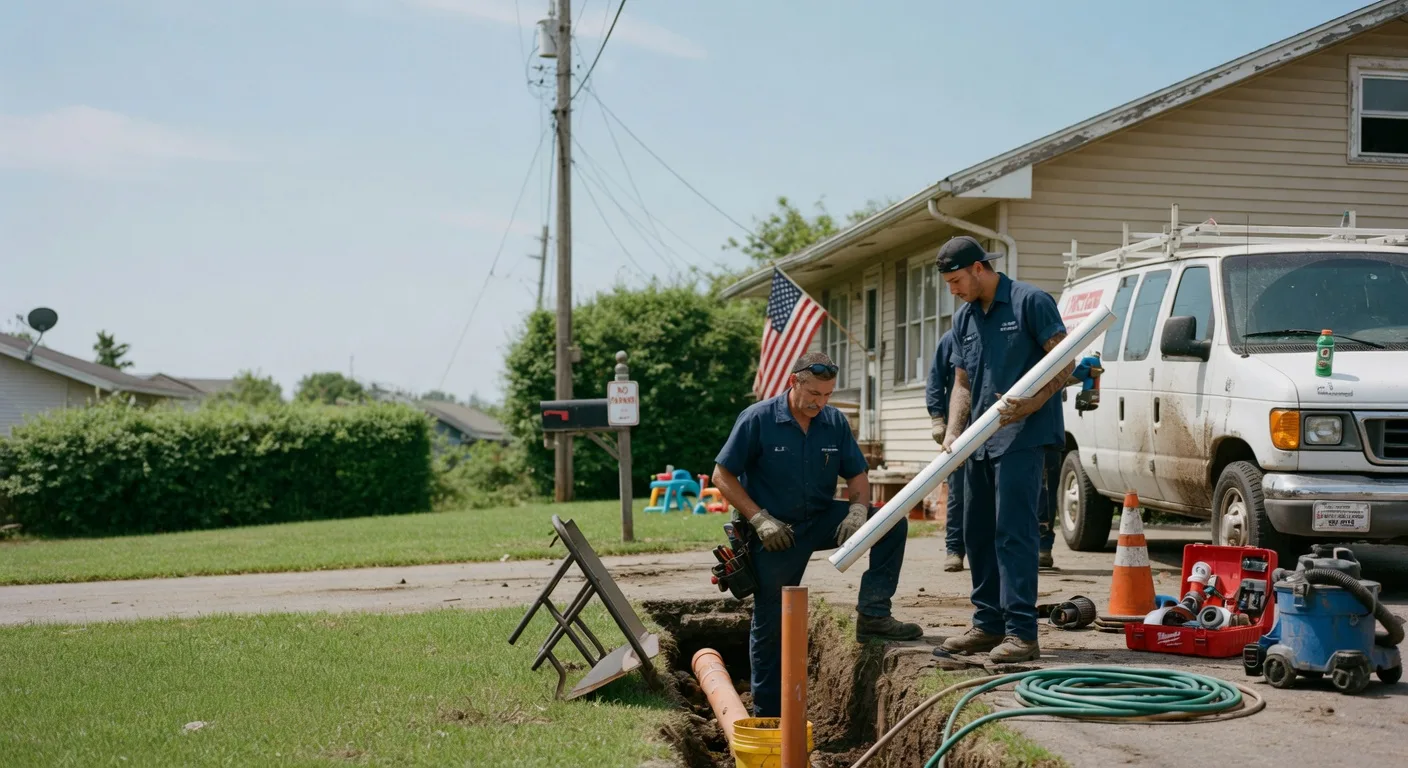
Tree roots get into a sewer line through a hairline crack or a loose joint. Clay pipe is the usual victim because it is laid in short sections, so there is a joint every few feet for a root tip to find. Roots follow moisture, so a strand enters, thickens, and starts catching paper and grease until flow stops. Warning signs are a main line that clogs on a predictable schedule, gurgling from drains near large trees, and a cable machine that keeps stopping at the same distance. One slow fixture is rarely roots. Several drains slowing together, or a basement floor drain that rises, points to the main line where roots live. A cable with a cutting head opens a channel through the mass for temporary relief, and hydro jetting scours the pipe wall more completely, but neither seals the entry point, so the roots return. A camera inspection shows the crack or joint, how much root is present, and the pipe's condition, which decides whether periodic cutting is enough or a section needs repair. Access and the length of pipe involved drive that cost. PVC resists root entry far better than clay. For a suspected root problem in Tippo, MS, Expert Plumbers Co connects you with an independent local plumber.
Prevention around trees is worth knowing about, because the root itself is rarely the whole story. Not every tree is a threat, and removing one is rarely the right first step, since the roots already in the pipe do not stop growing and the pipe's joints stay open. Willows, maples, poplars, and similar fast growers tend to be the worst for seeking out sewer lines, but any large tree in a dry spell can send roots to a pipe that holds moisture. Avoid pouring rock salt or copper sulfate products into toilets without asking a plumber first, since they can harm pipe and the wider water system. Keep records of when the line was last cut or jetted. If the intervals between clogs are getting shorter, that is a sign the root mass is thickening and a repair may soon be better value than repeated cleaning. Ask the plumber about replacement options.
The street sewer backed up into my house. What is a backwater valve?
Sewage came up through the basement floor drain, or a low toilet or tub gurgled and overflowed, during a storm or a heavy-use evening.
The usual cause is the municipal main in the street filling past capacity, called surcharging. With nowhere to go, the flow pushes back up the lateral and out of the lowest opening in the house.
A backwater valve, also called a check valve, is a fitting on the lateral or building drain with a flap that lets waste leave and shuts when flow reverses. It sits on the line ahead of the branches serving the lowest fixtures.
Fitting one is not a quick swap. It usually means opening the floor or digging to reach the pipe. What it involves depends on access, the depth of the line, the valve and materials, how much has to be opened up and restored, and whether a permit or code sign-off is required. Rules vary by area.
A valve does not fix roots at a clay joint or a bellied line holding water. It only stops reverse flow. A private line problem needs a camera inspection first, then a cable machine or hydro jetting depending on what the camera shows.
Street or private? Ask three things. Are the neighbors affected? Did it coincide with heavy rain? Is only the lowest opening backing up while upper fixtures drain normally? Yes to those points to the street main. Only your house, in dry weather, points to your own lateral.
Safe homeowner check: look at the neighbors and the forecast. Stop running water now: no flushing, washer or dishwasher. Keep people and pets out of contaminated water, and call.
Expert Plumbers Co is a referral service. We connect you with an independent local plumber in Tippo, MS. Call (380) 262-9173.
After the cleanup, ask how the valve will be kept working. The flap and its hinge can be stopped by lint, grease and grit, and then it no longer seats fully. Most valves have an access cover so the flap can be looked at and cleaned, and that should be done on a routine, not only after a storm. Learn where the cover is and keep boxes and floor coverings off it.
One point catches people out. With the valve closed during a storm, your own household water has nowhere to go either. Showers, sinks and the washer will fill the line behind the flap, so keep water use low until the street main drops.
After any backup, the floor drain and the area around it need to be cleaned and disinfected. Porous materials that soaked up sewage, such as carpet pad and cardboard, usually have to be removed rather than dried.
Can a drain under a concrete slab be cleared without breaking the floor?
Usually, yes. Clearing a blockage and repairing a broken pipe are two different jobs, and only the second one needs the floor opened.
In a slab-on-grade house the drain lines run inside or beneath the concrete. There is no crawlspace to inspect, so symptoms are the only evidence you have. A cable or a hydro jetter still reaches the line through a cleanout or through a pulled toilet. Grease build-up on the pipe wall, roots in a joint and scale in cast iron can all be cleared that way.
What does need the floor opened is a cracked, collapsed or bellied section under the slab. A bellied line holds water and collects waste however often it is cleared. In older housing stock where clay or cast iron was the standard, failed sections are more likely.
A camera inspection with a locator pinpoints the fault. The plumber finds the exact spot and marks it on the floor before anything is cut, which keeps the opening small. What the job involves is driven by access, the materials, how much concrete must be opened and removed, and any permit or code requirement. Opening a slab often brings one in.
Safe homeowner check: note whether one fixture is slow or every drain is affected. A single slow fixture is usually a cable job on a branch line. Every drain backing up points to the main line or the sewer lateral.
Stop running water and call now if the whole house is backing up. Report water staining or a warm, damp patch on the floor, because it can mean a leak under the slab.
Expert Plumbers Co is a referral service. We refer homeowners in Tippo, MS to an independent local plumber. Call (380) 262-9173.
A spot repair under a slab is more disruption than most people picture. The plumber breaks out a section of concrete, digs down to the pipe, replaces the damaged length, and the floor is patched. Dust, noise and a few days without some fixtures are normal. Furniture and flooring over the area must be moved first, and tile or a finished floor may not match after patching.
For longer runs of damage, some plumbers can line the pipe from inside, or route a new line overhead or outside the house, which avoids cutting the slab. Whether either suits your pipe depends on its condition and on local code.
Ask to see the camera footage and the locator mark on the floor before any cutting begins. Mention in-floor heating, radiant tubing or a post-tension slab if you have one. Cutting into those without knowing is dangerous, so the plumber needs to hear about them before a saw comes out.
My drains back up every autumn. Why is it seasonal?
That pattern is a clue. Drains that back up every autumn usually have a fixed fault that the season exposes.
Roots chase moisture and grow most actively in the warm months. A clay joint that was passable in spring can be choked by late summer. Then the first heavy autumn rain loads a line that was already marginal, and it backs up.
Leaves are the second cause. Leaves and seed debris wash into a yard drain, a window well or an open cleanout and pack the line. A third cause is a blocked vent stack. Leaves over the roof opening cause gurgling and slow flow without any clog in the pipe.
Safe homeowner check: clear the gutters and the yard drain grate, lift leaves out of the window well, and check that the cleanout cap is seated. Listen for gurgling after a toilet flush.
Stop running water and call now if every drain in the house is slow or backing up, if the lowest tub or floor drain bubbles or fills, or if sewage odor is strong. Those signs point to the main line or a failed sewer lateral. Water used in the house only adds to the backup. Emergency Drain Cleaning calls come from exactly this situation.
A single slow fixture is a cable job. A line that clogs on a schedule is a camera inspection case, because the interval is a symptom of a fixed fault. The camera shows whether it is root intrusion, a bellied section or a damaged joint. Hydro jetting clears the line, and the repair deals with the cause.
Expert Plumbers Co is a referral service. We refer homeowners in Tippo, MS to an independent local plumber. Call (380) 262-9173.
Keep a simple log. Note the date, the weather and which fixtures backed up each time. If the dates cluster on rainy days, a storm load or root problem fits. If they follow leaf fall in dry weather, look first at the vent stack and the outside drains. Hand the log to the plumber. It saves a lot of guessing.
If you can plan ahead, book a camera inspection in late summer, when roots are at their thickest and the line is not under storm load. Cutting roots back then, before the rain, is a calmer job than an overnight backup.
Be wary of root-killing foam as a cure. It can slow regrowth, but it does not repair the joint where the roots get in, and they return. Shallow-rooted trees near the lateral, such as willows and maples, are repeat offenders, so mention what grows near the line. Learn where your cleanout is before you need it.
Water or sewage is seeping out around the cleanout cap in my yard. What does that mean?
If liquid is seeping up around the cleanout cap, the sewer line is full to ground level at that point. The cleanout is a capped pipe that gives a plumber direct access to the main line, and it is often the lowest open point on the system. When a blockage sits downstream, waste water rises until it finds the weakest spot, and that is frequently the cap.
Less often the cap itself is the problem: a cracked cap or worn threads can weep a little after heavy use. The difference is the smell and the timing. A damp ring with no odor that dries out is one thing. Grey or dark water with a sewage smell that returns every time the house uses water points to a blocked or partly collapsed line.
Look at the rest of the house. If one fixture is slow, the trouble may be local. If several drains are slow, toilets gurgle, or a floor drain or shower fills when the washer runs, the main line is the likely culprit.
Safe checks you can do:
Keep children and pets away from the wet area. Hold off on laundry, dishwasher cycles and long showers. Do not unscrew the cap. A line under pressure can spray sewage when the cap comes off, and that is a health risk.
Stop running water and call now if sewage is reaching the yard in a steady flow, if it is entering the house, or if the seep keeps growing while you are using as little water as possible.
On the repair side, a cable machine is often enough for a soft blockage such as paper or grease. Roots, heavy grease build-up or scale usually call for hydro jetting or a cutting head. A camera inspection afterwards shows whether the pipe is cracked, bellied or offset at a joint, which decides whether cleaning will hold or whether a repair is needed. Cost depends on how easy the cleanout is to reach, how far the blockage sits from it, how much needs to be dug or removed if a repair follows, and permit requirements under local code.
If the line has to be opened for repair, the local building department may need to be involved. To be connected with an independent local plumber in Tippo, MS, call Expert Plumbers Co on (380) 262-9173.